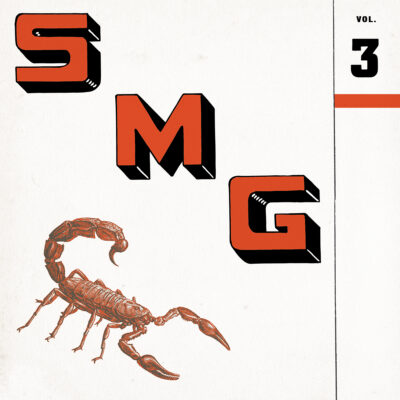
The third installment of Secular Music Group’s trilogy for Love All Day finds the group operating as a five-person ensemble for the first time. This latest release has the group following the exact same methodology as Volumes One and Two: no rehearsals, three days in the studio, and entirely recorded on a 1973 Teac 4-track ¼” tape deck. They’ve never been more fully realized in their intentions and compositions, and the clarity of the recording and innovative use of the studio makes it almost a sixth member. With five sets of hands and every member a multi-instrumentalist, the group was able to create fully complete arrangements with no overdubs whatsoever, and you can hear this approach on such tracks as “Fish in the ashes”, “Tzuan” and others. Conversely, on more elaborate tunes such as “Uxe” and “Go See the Place Where We Came From” (both of which originated from group member Yannis Panos) they were able to lay down a full five-man rhythm section in stereo and still have two tracks available for overdubs, turning these tunes into huge 10-part arrangements with just a single 4-track tape recorder. “Uxe”, which opens the album, illustrates this beautifully by beginning with a lilting, minimal, McCoy Tyner-esque piano vamp before gracefully expanding in sound, scope, and uplift. Utilizing drums, marimbas, synths, pianos, tenor, alto, and soprano saxophone, flugelhorn, tape loops electric piano and more, they’re still exploring the intersection of vintage soundtracks, modal jazz, and 1970s Italian library music, while also further heavily leaning into classical music this go round, whether on “Mother-Father”, whose pulsing maracas and ostinato rhythmic and melodic figures harken back to Steve Reich, or “He Was Asked to Name Everything”, which was informed by ancient Gregorian Chant tones, the “primitive tech” of early Stockhausen, and Arvo Pärt’s “holy minimalism”. One of the remarkable things about this group is how they make all these disparate parts and influences sound so cohesive. The music flows seamlessly, with every harmonically simple (yet timbrally complex) drone, dense chord, or jazz-influenced progression inhabiting some kind of liminal space that transcends genre.
-Michael Klausman